
Saturday 9 May
To Vienna by plane
Vienna, Musikverein • Renaud Capuçon and Igor Levit offered a masterful account of Brahms’s three Sonatas for violin and piano. The former seemed about as concentrated as the latter looked relaxed, and yet they complemented each other so convincingly that, more often than not, they appeared to play with a single mind. Together, they expertly navigated the full range of Brahmsian moods, and their performance proved colourful, intense, romantic, and ultimately exhilarating.
Sunday 10 May
Vienna, Konzerthaus • Performing Mahler’s scale-defying Symphony No. 8 one week after No. 3 borders on the unreasonable. Watching the Wiener Philharmoniker embark on such a Stakhanovite endeavour with Andris Nelsons was undeniably thrilling, yet it failed to trigger the same emotional response in me, even though the sheer scale of the assembled musicians and singers proved as visually striking as it was aurally overwhelming.
To Paris by plane
Tuesday 12 May
Paris, Théâtre de la Ville • A few minutes into this choreographic homage to Jacques Brel — co-conceived and performed by Anne Teresa De Keersmaeker and Solal Mariotte — I was reminded that my tolerance for the Belgian songster was, sadly, rather low. It didn’t help that very little actual movement took place on stage, and that De Keersmaeker and Mariotte often seemed more intent on listening to the songs alongside the audience than interpreting them through dance, relying instead on literal gestures — forming a heart shape with their hands — or an occasional pirouette: classical for her, breakdance-style for him.
Wednesday 13 May
Paris, Philharmonie • Evidently, young conductor Bar Avni had put considerable thought into crafting a programme of French music for the Orchestre de Paris. Bookended by two fun-filled orchestral staples — Milhaud’s Le Bœuf sur le toit and Shchedrin’s Carmen Suite (after Bizet) — two contrasting works allowed violinist Ava Bahari to showcase the breadth of her talent: Chausson’s Poème for lyrical expressiveness and Ravel’s Tzigane for sheer virtuosity. Alas, the intellectual satisfaction did not fully translate into visceral pleasure, with small lapses and missed opportunities standing in the way of a wholly satisfying experience.
Thursday 14 May
To Berlin by plane
Berlin, Philharmonie • Klaus Mäkelä’s first appearance at the helm of the Berliner Philharmoniker in 2023 had amounted to a missed rendezvous. That the Finnish conductor, barely 30 years old, chose Stravinsky’s The Firebird, a piece written by a 28-year-old determined to make his mark, for this 2026 concert seemed to add subtext to the programme. In any case, this triumphal performance unfolded in a profusion of nuances, and its fiery culmination sent shockwaves through the auditorium. Opening the evening with Andrew Norman’s Play, a highly technical yet immensely enjoyable contemporary work, allowed both orchestra and conductor to shine. This new rendezvous was certainly put to good use.
Friday 15 May
To Düsseldorf by plane, then Wuppertal by train
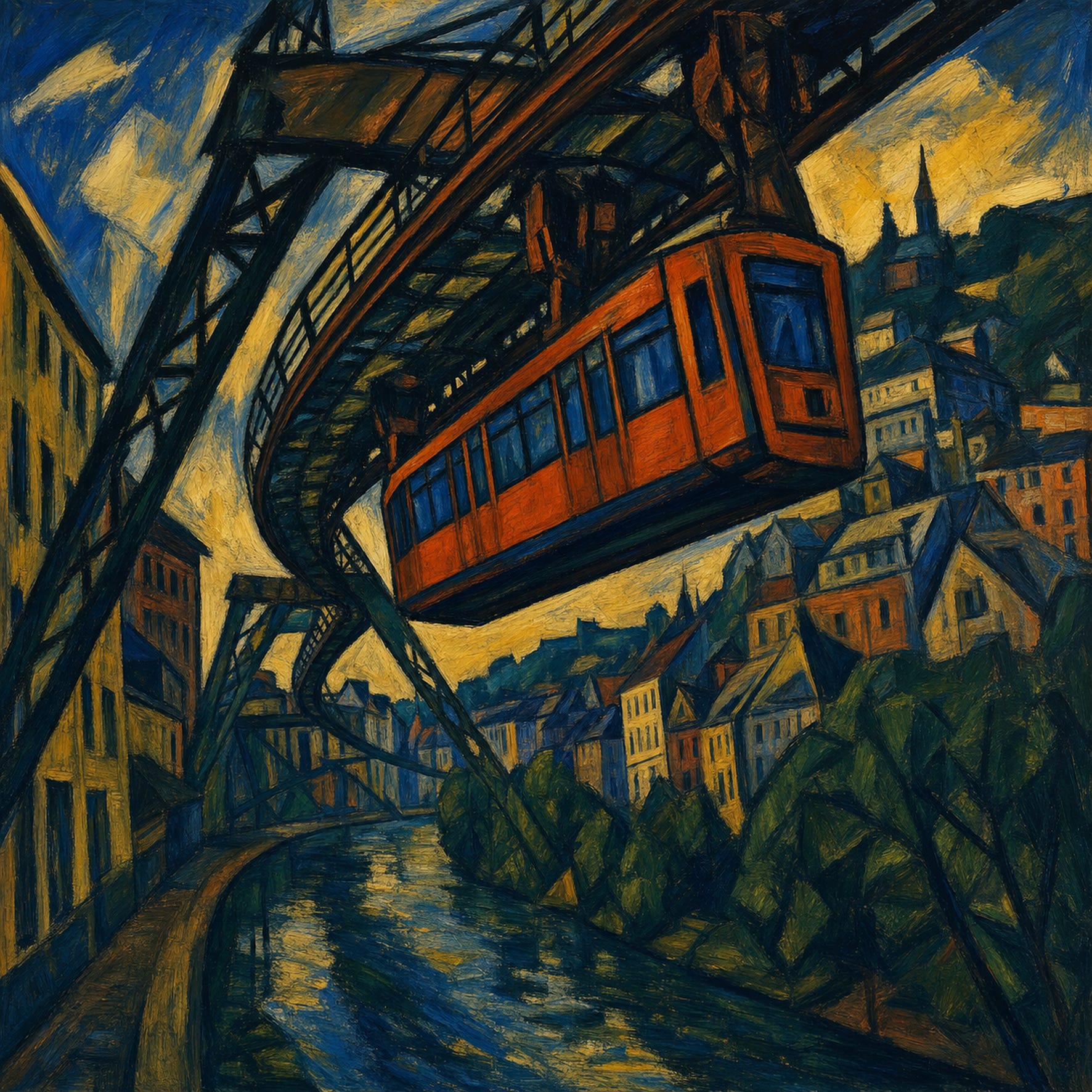
Wuppertal, Opernhaus • Thanks to the German repertory system, Oper Wuppertal could offer a remarkably ambitious and very successful production of The Light in the Piazza, one of the first masterpieces of the 21st century, relying almost entirely on its in-house personnel. The staging proved inspired and inventive, the full orchestra sounded superb, and the trained operatic voices did wonders navigating Adam Guettel’s demanding writing — I don’t think I’d ever heard such a good Franca. Strong performances across the board included a wonderful gallery of singers/actors bringing sharp comedic instincts to the Naccarelli family. Unusually, the supertitles described the scenes rather than translating them word for word. The lyrics were treated in a more typical fashion, and once again the English translation of the German lyrics sometimes differed from the original — which is how “Dividing Day” became “When Did Love Die?”
And so, for now, the lights dim… until the next act.