
Saturday 2 May
Vienna, Ronacher • The Austrian homegrown musical Maria-Theresia seemed intent on replicating the Hamilton formula, giving a historical figure a contemporary twist, both visually — the sleeveless costumes — and musically, with a score drawing from pop and rap. Yet talent like Lin-Manuel Miranda’s is scarce and the show felt more derivative than genuinely inspired. The overall scenic design partially made up for it through its inventive and fluid use of lights and projections, combined with a limited number of versatile set pieces.
Vienna, Volksoper • The recent debacle at New York’s Roundabout proved that even Gilbert & Sullivan productions in the English-speaking world can miss the mark. Which is why I approached this Austrian production of The Pirates of Penzance (Die Piraten von Penzance) warily. This Volksoper production wisely chose to embrace what makes British operetta so singular instead of trying to circumvent it. The end result proved thoroughly enjoyable, and hearing the score played by a full orchestra was a welcome treat. The few songs translated into German, and unwisely updated, sadly provided the low points of the show, illustrating, if proof were needed, that some properties should not be tampered with.
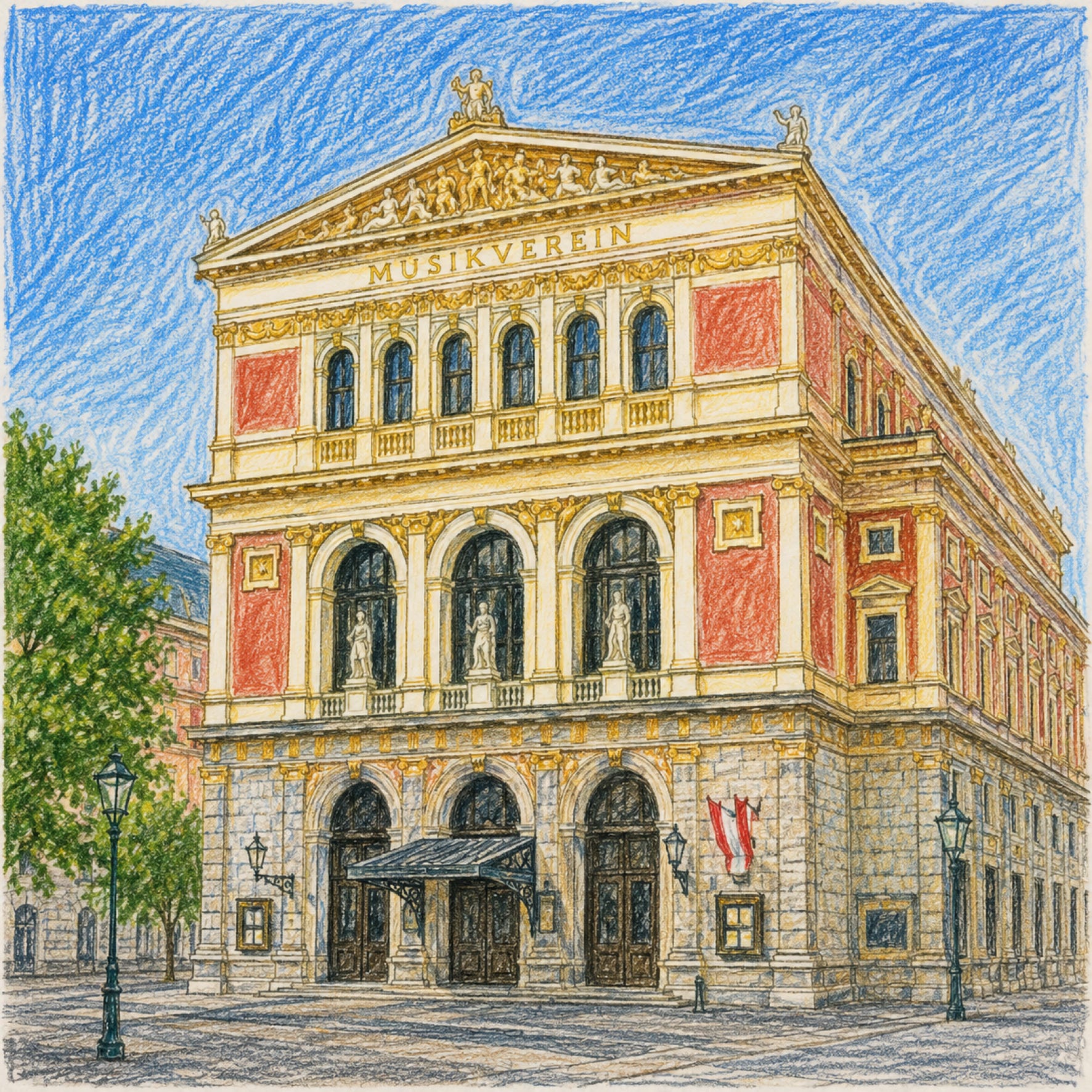
Sunday 3 May
Vienna, Musikverein • The performance of Mahler’s Symphony No. 3 by the Wiener Philharmoniker under Andris Nelsons became one of those suspended experiences bordering on the religious. Sitting behind the second violins, I was ideally placed to observe both the intricacies of the score — the section splits into four parts in the third movement — and the orchestra breathing as one, collectively intent on shaping every dramatic contour of the music. Such intensity left me almost physically overwhelmed, and I struggled to regain my bearings after the exquisitely managed final release.
To Paris by plane
Wednesday 6 May
Paris, Philharmonie • Klaus Mäkelä led the Orchestre de Paris in a programme coupling Grieg’s Piano Concerto (with Japanese pianist Nobuyuki Tsujii) and Mahler’s Symphony No. 1. An embarrassment of riches, played with generosity and an infectious sense of communal pleasure. Kudos to principal double bass Ulysse Vigreux for giving the symphony’s third movement its earthy, almost creaky opening statement.
Friday 8 May
To Berlin by plane
Berlin, Philharmonie • Kirill Petrenko led the Berliner Philharmoniker in a repeat of the previous week’s Europakonzert at Schloss Esterházy, minus the occasional Haydn Overture. Throughout the exquisitely executed programme, a theme of musical transitions emerged: Stravinsky relying on Pergolesi to unveil his neoclassical — yet decidedly forward-looking — idiom in Pulcinella; Tchaikovsky’s Rococo Variations, still played spotlessly by Gautier Capuçon, transforming a seemingly passé theme through the composer’s unmistakable romantic sensitivity; and Beethoven’s Symphony No. 2, acknowledging the form’s debt to Haydn and Mozart while resolutely opening a new chapter.
And so, for now, the lights dim… until the next act.