
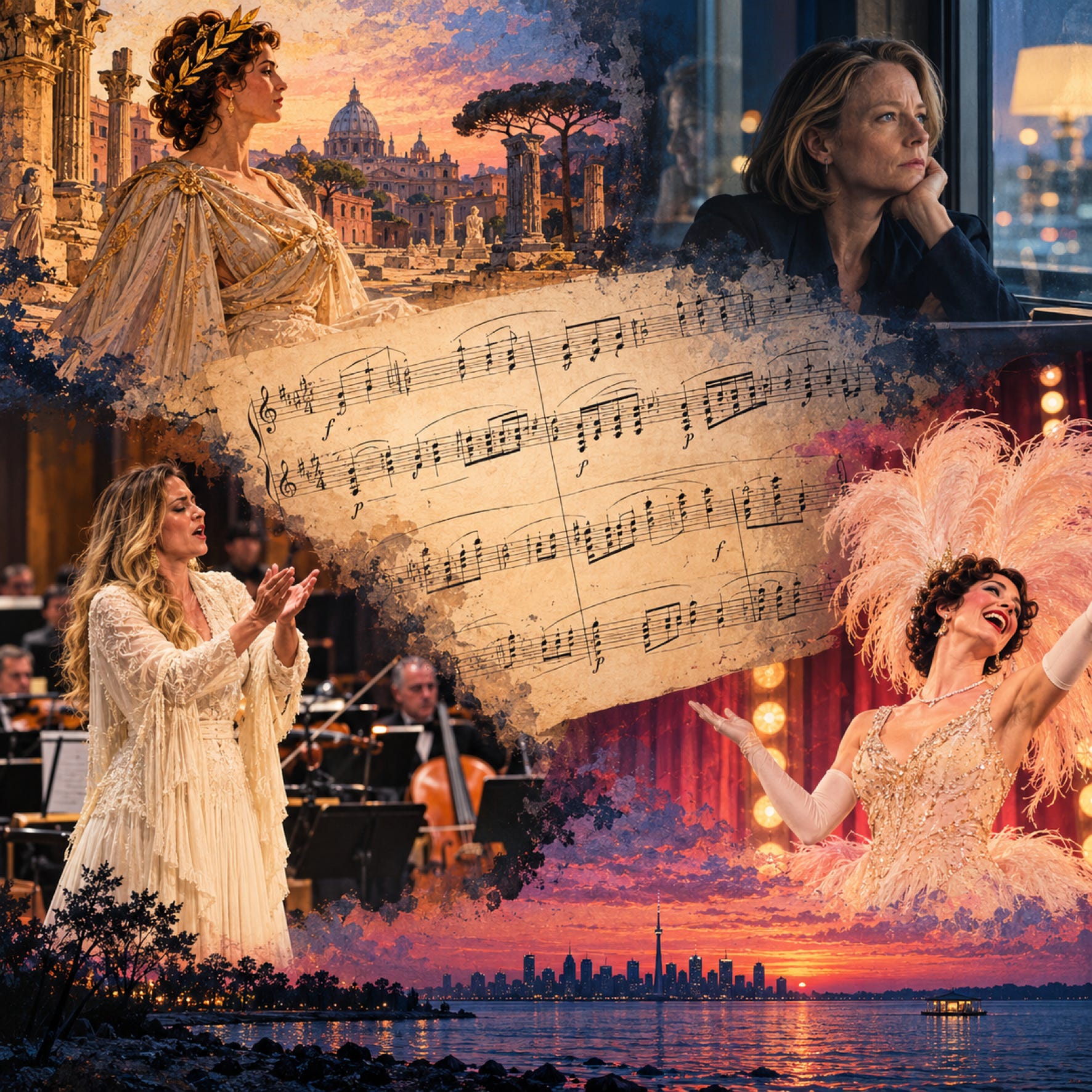
Saturday 26 September
Berlin, Philharmonie • A last-minute change of plans meant I got to hear Mahler’s Symphony No. 2 in Berlin instead of Florence. Daniel Harding led the Berliner Philharmoniker with his usual authority, but his penchant for unnecessary refinements got between me and the emotion. The string section, inhabited by an almost Hungarian fire, played with iron-hot rawness.
Monday 28 September
Paris, Théâtre des Champs-Élysées • Massenet’s Roma was the last opera created during its composer’s lifetime. Hardly ever performed nowadays, it was given a high-profile concert presentation by the Orchestre Philharmonique de Monte-Carlo under Diego Ceretta — appropriately, since Monte-Carlo is where Roma was created in 1912. The opera looks back to the 19th century, and this fine performance showed the obscurity it has fallen into isn’t tragically undeserved. However, signs of modernity began to emerge after intermission… and a (probably accidental) quote from Mahler’s Symphony No. 1 leapt out at me in the Prologue to Act IV, as if Massenet had suddenly decided to look forward.
Thursday 1 October
In the air • Rebecca Zlotowski’s Vie Privée features an awe-inspiring Jodie Foster as a psychiatrist confronted with the death of one of her patients. The plot, however, abounds in strange turns and loose ends, revealing the script’s lack of discipline and dramatic consistency. Gustav Mahler’s Kindertotenlieder occupied a central musical and metaphorical place, much to my delight.
Toronto, Roy Thomson Hall • How I wish all concert programmes were as adventurous as this offering from the Toronto Symphony Orchestra. To set the mood for Manuel de Falla’s El amor brujo — performed in celebration of Falla’s 150th birthday — conductor Gustavo Gimeno opened the first part with an original composition by flamenco singer Maria Toledo (who went on to perform in the Falla), segueing into a contemporary work for solo clarinet by José González Granero, Canto y danza, strikingly played by Eric Abramovitz, the TSO’s principal clarinet. The more conventional second part was devoted to Stravinsky’s Petrushka, performed with a keen attention to timbre but lacking a certain edge at times.
Friday 2 October
Niagara-on-the-Lake, Festival Theatre • One of the most iconic musicals of Broadway’s Golden Age is also one of the trickiest to get right. Not only does it require a leading lady with huge shoulders, it also needs to be credible when paying tribute to the big Ziegfeld extravaganzas. The Shaw Festival’s production of Funny Girl ticked many right boxes. As Fanny Brice, Sara Farb displayed delightful comedic chops as well as the ability to carry the formidable Jule Styne songs — she reminded me a bit of Leslie Kritzer when she led the Paper Mill Playhouse revival back in 2001. The set and lighting designs gave Eda Holmes’s attentive staging a remarkable fluidity. The costumes suffered from the post-Hamilton trend to bare the male dancers’ arms, but their wide colour palette contributed to the show’s visual charm. As far as I can tell, the unnecessary book emendations of recent productions were dispensed with, giving Isobel Lennart’s original libretto a chance to show its considerable worth. Most of all, the orchestra performed with a keen sense of period and style. How comforting that there are still creatives with the right instincts to deal with such a legendary show.
Back in Toronto, while enjoying the sunset on the bank of Lake Ontario, I came upon the floating Global Convenience Store by Trevor Wheatley and Cosmo Dean, a remote cousin of Prada Marfa. The delightful irony of the unreachable 24-hour store couldn’t have pleased me more.