
Saturday 6 December
To Vienna by plane. At the Musikverein, the Wiener Philharmoniker’s third Abonnementkonzert, led by Jakub Hrůša, was as gripping as it was unusual: Kodály’s Dances of Galánta, Bartók’s Suite from The Miraculous Mandarin, Dvořák’s Holoubek (The Wild Dove), and Janáček’s Taras Bulba. Rarely had I witnessed such a level of commitment from the orchestra, who played those carefully selected Hungarian and Czech pieces with extraordinary energy.
Later that day, back at the Musikverein, the Rotterdam Philharmonic Orchestra under Lahav Shani offered an exhilarating programme: Wagenaar’s overture Cyrano de Bergerac, Rachmaninoff’s Piano Concerto No. 2 by Alexander Malofeev — who replaced an ailing Martha Argerich, who had been slated to play Schumann’s concerto —, and Bruckner’s Te Deum. Nonstop goosebumps is the aptest description of the experience. A high point was provided by the Singverein der Gesellschaft der Musikfreunde in Wien, whose performance in the Te Deum was mesmerising.
Sunday 7 December
Back to Paris by plane. At the Théâtre Antoine, a new musical adaptation of Gaston Leroux’s Le Fantôme de l’Opéra by Benoît Solès, Marc Demais and Pierre-Yves Lebert pushed the material into pop-music territory, even more overtly than Lloyd Webber’s version. Despite a certain visual ambition, the show struggled to find a cohesive voice and brought back memories of the (not so) glorious period when French pop musicals flourished in the wake of Notre-Dame de Paris (1998). English and Chinese supertitles suggested that expectations for the show might extend beyond Paris.
Monday 8 December
Paris – Nacera Belaza’s dance performance Les Ombres began as a perambulation through the newly opened Galerie des Cinq Continents, a stunning reimagining of the Louvre’s Galerie des Sessions, where artworks from across the globe are allowed to enter into dialogue on an equal footing. The procession enabled the performers — some of them high-school students — to interact with a selection of works before moving upstairs to the more traditional, venerable Salle Murillo. There, the audience was invited to sit while the dancers performed a spellbinding sequence of organic movements, seemingly improvised yet executed with uncanny precision, as if obeying invisible natural laws.
Tuesday 9 December
Paris – At the Théâtre des Champs-Élysées, Korean pianist Seong-Jin Cho offered an eclectic programme of works by Liszt, Beethoven, Bartók and Chopin, clearly designed to showcase his uncanny virtuosity. The result proved a mixed bag, with the Beethoven (the Pastorale Sonata) and Chopin (an extended sequence of waltzes occupying the entire second part) lacking the je-ne-sais-quoi which transcends technical command and opens a window onto the soul. Cho struck me as more convincing in the Liszt and, above all, in Bartók’s Szabadban (Out of Doors), Sz. 81, where his virtuosity felt fully aligned with the music’s raw expressionism.
Wednesday 10 December
Paris – At the Philharmonie de Paris, Klaus Mäkelä led the Orchestre de Paris in a programme whose highlight proved to be the sumptuous performance of Max Bruch’s Violin Concerto No. 1 by Daniel Lozakovich, who was replacing an ailing Janine Jansen, originally slated to play Brahms’s Concerto. The concert opened with a hypnotic piece by Ellen Reid, a joint commission of the Orchestre de Paris and the Concertgebouworkest. It concluded with a masterful reading of César Franck’s Symphony in D minor — a score of limited melodic and harmonic variety which Mäkelä nevertheless managed to turn into an ever-changing whirlwind of sound. Special praise to the ravishing cor anglais solo in the second movement.
Thursday 11 December
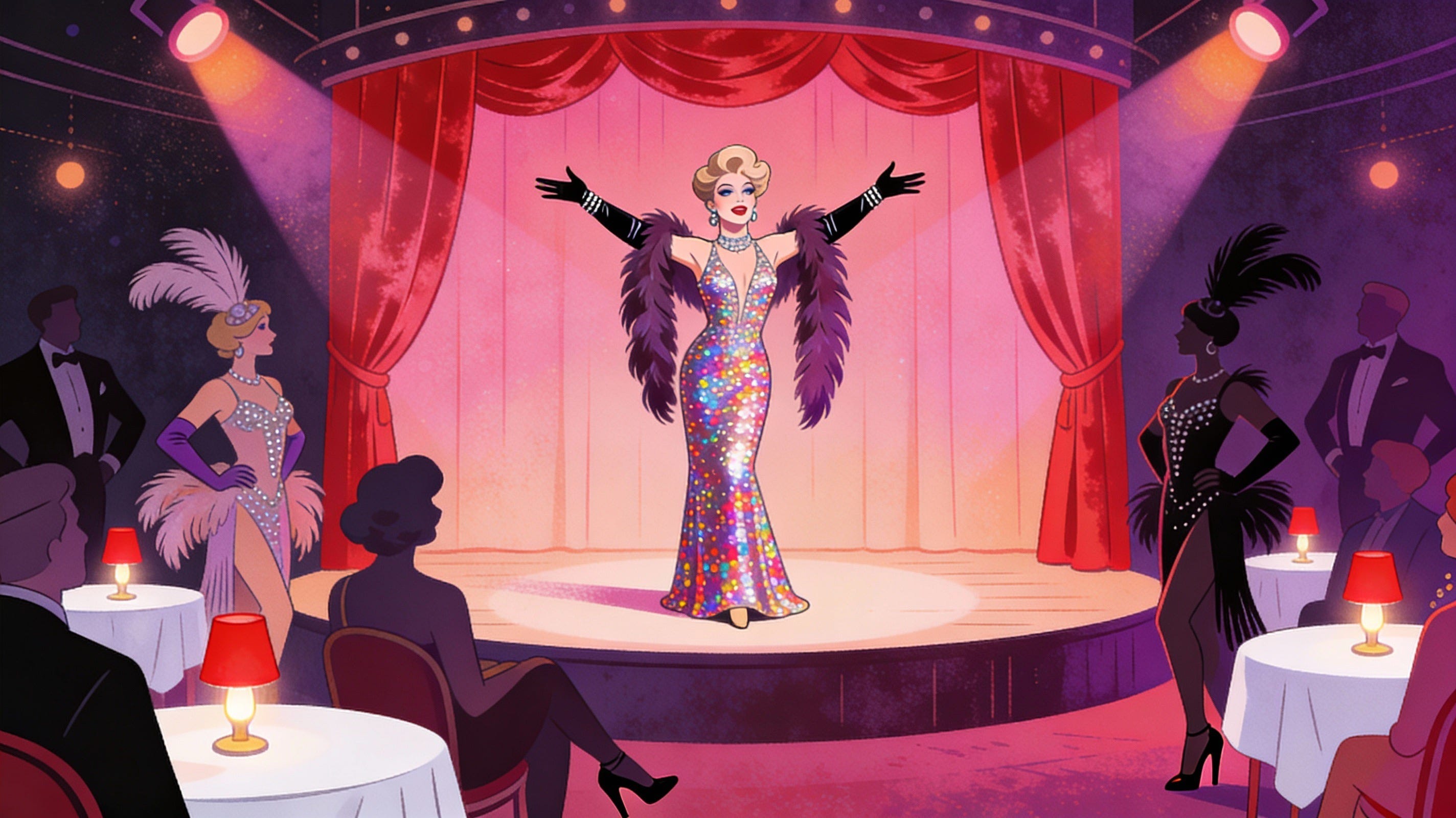
Paris – At the Théâtre du Châtelet, Olivier Py offered a delicately crafted French-language adaptation of Jerry Herman and Harvey Fierstein’s La Cage aux Folles. Py made significant changes to the libretto and lyrics, yet his amendments were for the most part sensible and thoughtful. The magnificent score was untouched — except for the now-familiar variant of opening the overture with an accordion solo. The convoluted set, which attempted to combine all locales within a revolving cube, proved more clunky than nifty and unwisely reduced Georges and Albin’s apartment to a shallow elevated platform with no room to sit. A solid cast, led by the amazing Laurent Lafitte, found just the right tone to eschew histrionics and anchor the evening in a profound and touching humanity.
And so, for now, the lights dim… until the next act.