
Saturday 27 December
Lisbon • After a leisurely stroll on the slopes of the Chiado, I made my way to MACAM – Museu de Arte Contemporânea Armando Martins, which brings together private collections of contemporary art, starting with that of its founder, Armando Martins, a successful Portuguese businessman. The museum occupies part of the Palácio Condes da Ribeira Grande in Junqueira, alongside a high-end hotel. Not only are the premises prepossessing, but the museology excels at explaining the major currents of modern and contemporary art — illustrated primarily through Portuguese artists — from the late 19th century onward.
A short walk along the Tagus led to the LX Factory, a lively shopping and artistic district housed in repurposed industrial buildings beneath the arches of the 25 de Abril Bridge. One of its main attractions is Ler Devagar, where hundreds of new and second-hand books rise floor to ceiling in a cathedral-high space.
I continued to MAC/CCB – Museu de Arte Contemporânea, part of the Centro Cultural de Belém, which also incorporates several performance venues, including a 1,443-seat auditorium. As at MACAM, the extensive collection is organised to highlight the movements and tendencies that shaped 20th-century art and beyond, albeit on a much larger scale.
A pleasant walk through Belém finally led me to MAAT – Museu de Arte, Arquitectura e Tecnologia, housed in two fascinating yet radically contrasting buildings: Central, the former Tejo Power Station, a majestic red-brick industrial complex whose boilers and turbines remain in place despite going out of use in the 1970s; and Gallery, an undulating structure of infinite grace — like a wave rolling along the riverbank — designed by British architect Amanda Levete.
The day concluded with cheese, charcuterie and tawny port at 17.45, the Lisbon outpost of a French restaurant chain.
Sunday 28 December
Lisbon • My second day started at Livraria Bertrand, the self-advertised world’s oldest operating bookshop in charming vaulted premises in the Chiado neighbourhood. A few steps away lies MNAC – Museu Nacional de Arte Contemporânea, another institution devoted to illustrating the evolution of modern and contemporary art throughout the 20th century, with slightly less convincing results than the places I visited the previous day.
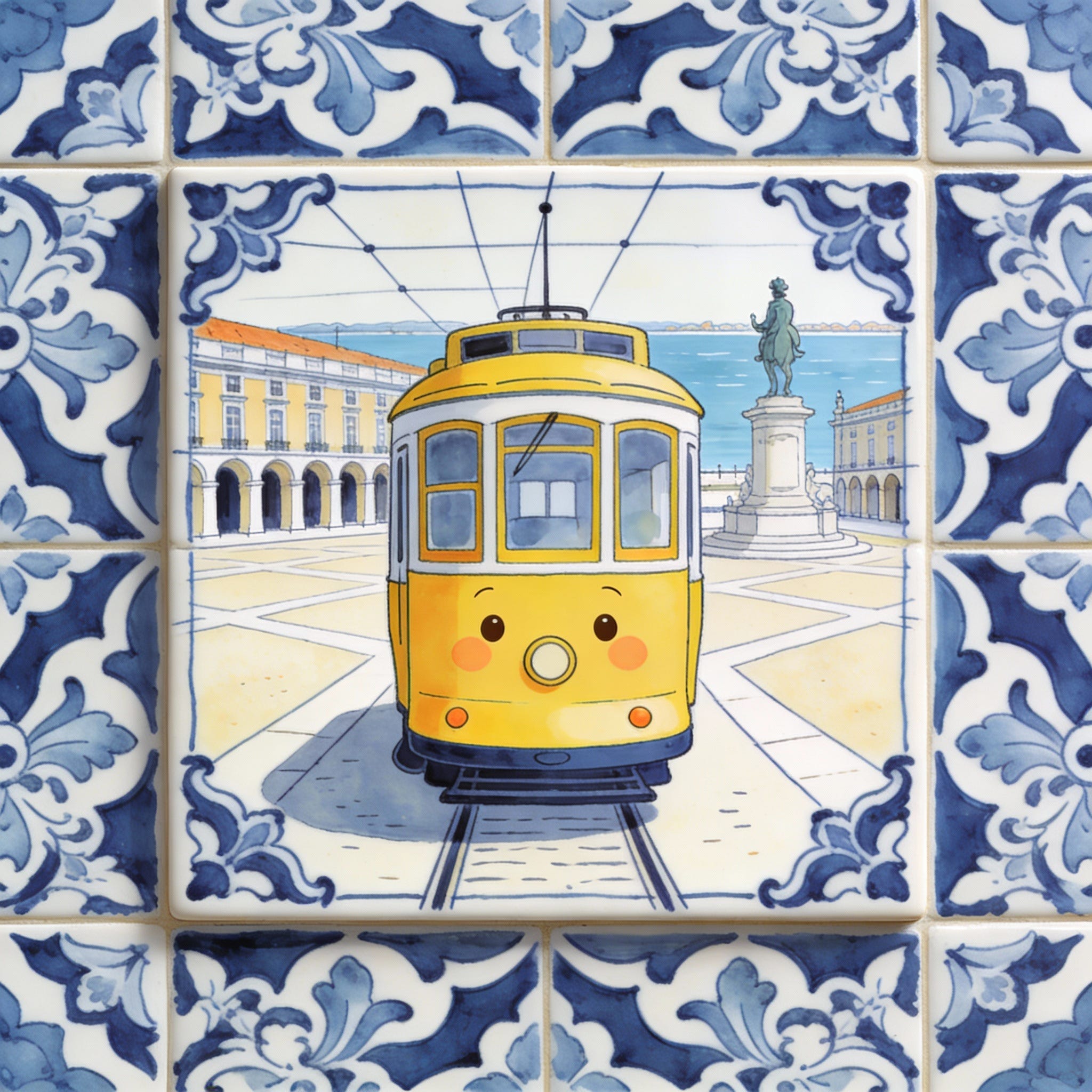
After a few steps on the banks of the River Tagus, I took in the overwhelming scale of the Praça de Comércio, Lisbon’s monumental reminder of its past maritime and economic glory. It was soon time to conclude my stay at Gambrinus, a restaurant awash in old-world style with its Sá Nogueira murals, table-side service and ceremonial flambéing of the crêpes suzette.
Back to Paris by plane.
Monday 29 December
Paris, Salle Richelieu • The Comédie-Française came up with the strange but ultimately rewarding idea of reviving Carlo Goldoni’s obscure 1759 comedy La Scuola di ballo (as L’École de danse) on its main stage. Aside from the debatable decision to place the action within the bleak set currently used for Le Misanthrope — fitted with different windows to suggest a subterranean space — the production offered an abundance of pleasures. Some of the troupe’s most gifted actors, led by the formidable Denis Podalydès, brought flesh and spark to this delectable comedy of manners, very much in the tradition of Molière and made all the wittier by its insider’s view of a self-absorbed, duplicitous theatrical milieu.
Partially lost in translation was the play’s original structure in hendecasyllabic tercets, so integral to its rhythm and tone, although Françoise Decroisette’s modern, fluid adaptation into French artfully approximated the conversational quality of that uniquely Italian prosody, one that favours motion and musicality — so appropriate here considering the subject matter and its choreographic allusions:
Terminiamo, signor, questo discorso.
Ballerò, se vorrò. Se non vi piace,
Andate a farvi pettinar da un orso.
Tuesday 30 December
Paris, Opéra-Bastille • Roland Petit’s ballet Notre-Dame de Paris, the now-iconic 1965 Opéra de Paris commission with music by Maurice Jarre, a set by René Allio and costumes by Yves Saint-Laurent, has been revived several times, alternating between its original home, the Palais-Garnier, and the newer Opéra-Bastille. Time has not been kind to a piece that is better approached today as a testimony to what “modernity” entailed back in the 1960s — bearing in mind that even at the time, reviews were mixed. Petit himself originated the part of Quasimodo, and his magnetic performance (if contemporary accounts are to be trusted), combined with a knack for fluid transitions, likely contributed more to the ballet’s reputation than a choreographic style that often borders on stylised pantomime. Still, this revival offered a welcome chance to open a window onto a not-so-distant past which, strikingly, already belongs to history.
Wednesday 31 December
To Dubai by plane • On the plane, I watched Jay Roach’s biting comedy The Roses (2025). The film mostly takes off in its last thirty minutes, when favourites Olivia Colman and Benedict Cumberbatch give their all in epic, satirical battle scenes — reminiscent of Fred Graham and Lilli Vanessi’s bickering in Kiss Me, Kate. It was nice to spot Ncuti Gatwa, of Sex Education fame, among the supporting cast.
Thursday 1 January
Dubai, Roxy Cinema Dubai Hills • In his film Nuremberg (2025), James Vanderbilt made the inspired decision to address the Nuremberg Trials through the lens of the interactions between real-life psychiatrist Douglas Kelley and the then highest-ranking surviving Nazi official, Hermann Göring. Reading Kelley’s chapter about Göring in 22 Cells in Nuremberg (1947) confirmed how widely the authors of the film relied on Kelley’s vivid, insightful, authoritative account. Rami Malek and Russell Crowe give defining performances, while Leo Woodall adds welcome warmth and humanity through his well-written fictive supporting character.
After consigning his thoughts and findings on the twenty-two prisoners he was assigned to evaluate, Kelley concluded his book on a chapter titled “What does it mean to America?” I’ll only quote a few sentences:
[…] aside from our lack of homogeneity, and all that it implies in varying origins, a two-party system, and legal “paper” guarantees of minority rights, I am convinced that there is little in America today which could prevent the establishment of a Nazi-like state. […]
As far as the leaders go, the Hitlers and the Goerings, the Goebbels’ and all the rest of them were not special types. […] Strong, dominant, aggressive, egocentric personalities like Goering, differing from the normal chiefly in their lack of conscience, are not rare. They can be found anywhere in the country—behind big desks deciding big affairs as businessmen, politicians, and racketeers.
And so, for now, the lights dim… until the next act.