
Saturday 20 September
To Vienna by plane. The Wiener Philharmoniker’s first Subscription Concert of the season at the Musikverein was conducted by Tugan Sokhiev and featured Prokofiev’s Piano Concerto No. 3 with Martha Argerich, followed by the original 1911 version of Stravinsky’s Petrushka. At 84, Argerich still reigns supreme in “Prokofiev-3,” a concerto she has championed for decades. Her breathtaking technique and unerring musical instincts elevated the score to Elysian heights. The orchestra giddily joined her, guided by Sokhiev’s unmatched instincts in the Russian repertoire, which also illuminated Petrushka, that other early-20th-century Russian modernist masterpiece, written by a composer still in his twenties. Argerich’s incandescent performance inevitably shifted the concert’s centre of gravity.
On to the Heidi Horten Collection for a view of the permanent collection of contemporary art as well as an exhibition dedicated to “The Line,” this omnipresent and easily overlooked component of pictorial art. A line can join, separate, illustrate free flow or constrain movement; it can be an object of experimentation, a presence in the background or a subject in itself. (Heidi Horten’s wealth, I found out, was inherited from husband Helmut Horten, whose fortune grew from the acquisition of Jewish-owned businesses under duress during the Nazi era.)
In the evening, I attended Jean Racine’s Bérénice at the Akademietheater, performed by the Comédie-Française on tour. This production by Guy Cassiers, which had premiered in Paris earlier in the year, favoured hushed dialogues and cast a single actor (the brilliant Jérémy Lopez) as both Titus and Antiochus, yielding more languor than revelation, and draining some of the play’s dramatic tension.
Sunday 21 September
Back to Paris by plane. The Fondation Henri Cartier-Bresson hosted an exhibition of the 110 portraits in Richard Avedon’s series In the American West. Avedon undoubtedly had an eye for “faces.” Giving ordinary people the high gloss treatment usually reserved for his Vogue portraits, with sharp contrasts against a pure white background, yielded not only a spotlight on working-class America, but also a tale of resilience and dignity.
Monday 22 September
Paris – The London Symphony Orchestra offered a somewhat disjointed programme at La Philharmonie de Paris under conductor Antonio Pappano. The concert opened with Shostakovich’s Symphony No. 9 and continued with Britten’s Violin Concerto, played with hypnotic brilliance by Janine Jansen. The Britten concerto brims with Shostakovichian edges, but it also conjures up Wagnerian echoes, notably in the horn solos and the glowing coda, with its luminous harmonic resolution. After that, I was in no mood for Beethoven’s Fifth, which completed the programme, and left.
Tuesday 23 September
Paris – Although Joël Pommerat is considered one of the foremost creative forces in France’s contemporary theatre, I only knew him through his contribution to Francesco Filidei’s striking opera L’Inondation. His play Marius, freely adapted from Marcel Pagnol ten years earlier for a cast mixing professional actors and prisoners from an Arles prison, was revived at the Théâtre du Rond-Point. I soon forgot my annoyance at the poor enunciation and fell under the spell of the mixture of authenticity and dramatic crispness, orchestrated with the precision of a ticking clock.
Wednesday 24 September
Paris – Back at La Philharmonie de Paris for a concert of the Orchestre de Paris under Daniel Harding. After a short first part comprising Moussorgsky’s Prelude to Khovanshchina and a rather lacklustre performance of Sibelius’s Tapiola, the pièce de résistance of the concert was a full performance of Act 1 of Wagner’s Die Walküre featuring Miina-Liisa Värelä, Jamez McCorkle and Stephen Milling. The performance seemed underrehearsed and never generated the thrill this act can convey.
Thursday 25 September
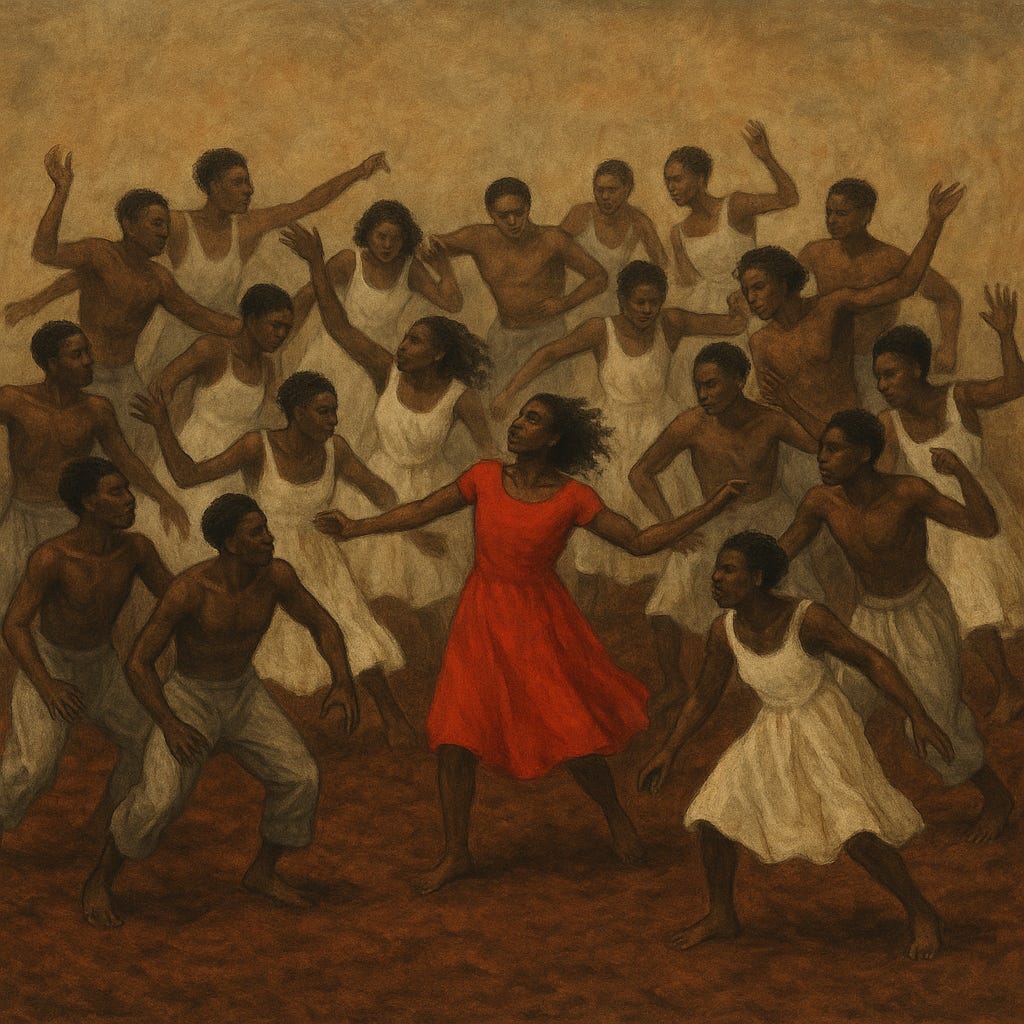
Paris – The Théâtre des Champs-Élysées, which changed management recently, offered a dual programme of two ballets celebrating events that took place in the theatre. Joséphine, a creation by Germaine Acogny, celebrated Joséphine Baker, who caused a sensation in La Revue nègre in 1925. Pina Bausch’s 1975 Le Sacre du printemps was inspired by the Stravinsky masterpiece that had caused a riot in this very theatre in 1913 when Nijinsky’s choreography was created by Diaghilev’s Les Ballets russes. I have no idea what Acogny meant to convey in her piece, but the contrast with Bausch’s groundbreaking choreography, performed by a remarkable group of African dancers, was cruel. Le Sacre, danced on a stage of earth — which was set up during intermission in full view of the audience — was raw, visceral and overwhelming.
Friday 26 September
To New York by plane – I watched Luchino Visconti’s Conversation Piece (aka Gruppo di Famiglia in un Interno in Italian or Violence et passion in French), a fascinating 1974 movie starring Burt Lancaster, Helmut Berger and Silvana Mangano. Ten years after Il gattopardo, Lancaster gave another performance for the ages as “The Professor,” a man whose life is changed irrevocably by the intrusion of an eccentric entourage who, in ways more or less explicit, act as agents of his destiny. It felt very Pinterian to me, and the atmospheric score by Franco Mannino gave weight to the claustrophobic closed-room drama.
After seeing it in Paris almost exactly one month earlier, I caught a performance of Yasmina Reza’s Art directed by Scott Ellis at the Music Box. The title appeared without the quotation marks that Reza considers integral, a small omission that removed a layer of irony. Whatever reservations I may harbour about Reza’s writing were swept aside by an exhilarating performance, a masterclass in comedy delivered by three giants: Bobby Cannavale, James Corden and Neil Patrick Harris, each reaching incomparable peaks of physical bravura and comic timing. With acting of this calibre, who needs quotation marks?
And so, for now, the lights dim… until the next act.