
Saturday 1 November
Flew to Vienna. At the Musikverein, Christian Thielemann led the Wiener Philharmoniker’s second Abonnementkonzert of the season, devoted to Bruckner’s Symphony No. 5. The programme opened with Samy Moussa’s Elysium, a cathedral-sized sonic tapestry premiered by the Philharmoniker and Thielemann in 2021 at Barcelona’s Sagrada Familia, and an apt prelude to Bruckner’s monumental masterpiece. The symphony sounded glorious, very much in the vein of the orchestra’s superb 2021 recording, despite subtle signs that the players might have been partly on autopilot.
A few miles away, Baden bei Wien’s Stadtheater was rather unexpectedly trying its hand at Winnie Holzman and Stephen Schwartz’s runaway success Wicked. Although I had seen excellent productions there — Nine comes to mind —, there had also been cases where the company had aimed above its head, as with Funny Girl. The non-replica production turned out to be delightful: not only thanks to an excellent cast, but also because the challenges of staging were met with both skill and imagination. The restrained amplification let the score’s charm emerge, in sharp contrast to what has sadly become the norm on larger stages.
Sunday 2 November
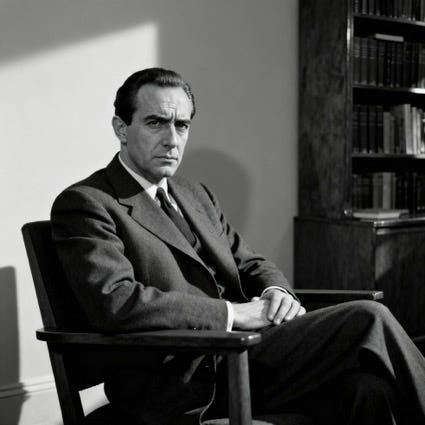
Flew back to Paris. Saw François Ozon’s L’Étranger (The Stranger) (2025), a black-and-white, liberal adaptation of Albert Camus’s classic. Several key scenes stirred faint memories of reading the novel, and I soon yielded to the film’s strong graphic aesthetic and to Benjamin Voisin’s charisma as Meursault, the fascinating, estranged-from-the-world anti-hero.
Tuesday 4 November
Paris – At the Théâtre des Champs-Élysées, Jonathan Biss undertook the Herculean task of playing Beethoven’s last three piano sonatas in a single sitting. There was plenty of huffing and puffing, and the music sometimes strayed into unexpected territory — the midsection of Op. 111, for instance, briefly evoked a honky-tonk —, but Biss also managed more than once to illuminate the confounding genius of this summit in the piano repertoire.
Wednesday 5 November
Paris - At the Théâtre des Abbesses, Gaëlle Bourges’s Juste Camille turned out to be one of those performances whose worth seems entirely contained in the ten-line programme blurb. Whatever might have sounded intriguing in those rambling reflections triggered by an unusual object — a fifteenth-century wedding coffer chanced upon in a museum — never quite came to life in a slow, literal, and ultimately trite pantomime.
Thursday 6 November
In a private performance just outside Paris, the Le Balcon orchestra under Maxime Pascal offered a fluid, colourful reading of Mozart’s Gran Partita. Although the ensemble’s discipline faltered somewhat in the last movement, there was a lot to admire in the quiet — and at times almost miraculous — blending of timbres and harmonies.
Friday 7 November
Paris – At the Théâtre de Chaillot, Fanny de Chaillé’s Avignon, une école proved that a wild concept on paper can, in fact, yield an engrossing show. Reënacting and commenting on key moments from the Festival d’Avignon’s history from its 1947 beginnings onward, fifteen acting students raised thought-provoking questions about the theatre and its societal significance. I couldn’t help but feel sheer joy at the thought that young actors might feel so keenly curious about the history of their craft as to bring such a compelling historical perspective, with just the right dose of irony and humour to prevent over-intellectualisation.
And so, for now, the lights dim… until the next act.