
Saturday 5 September
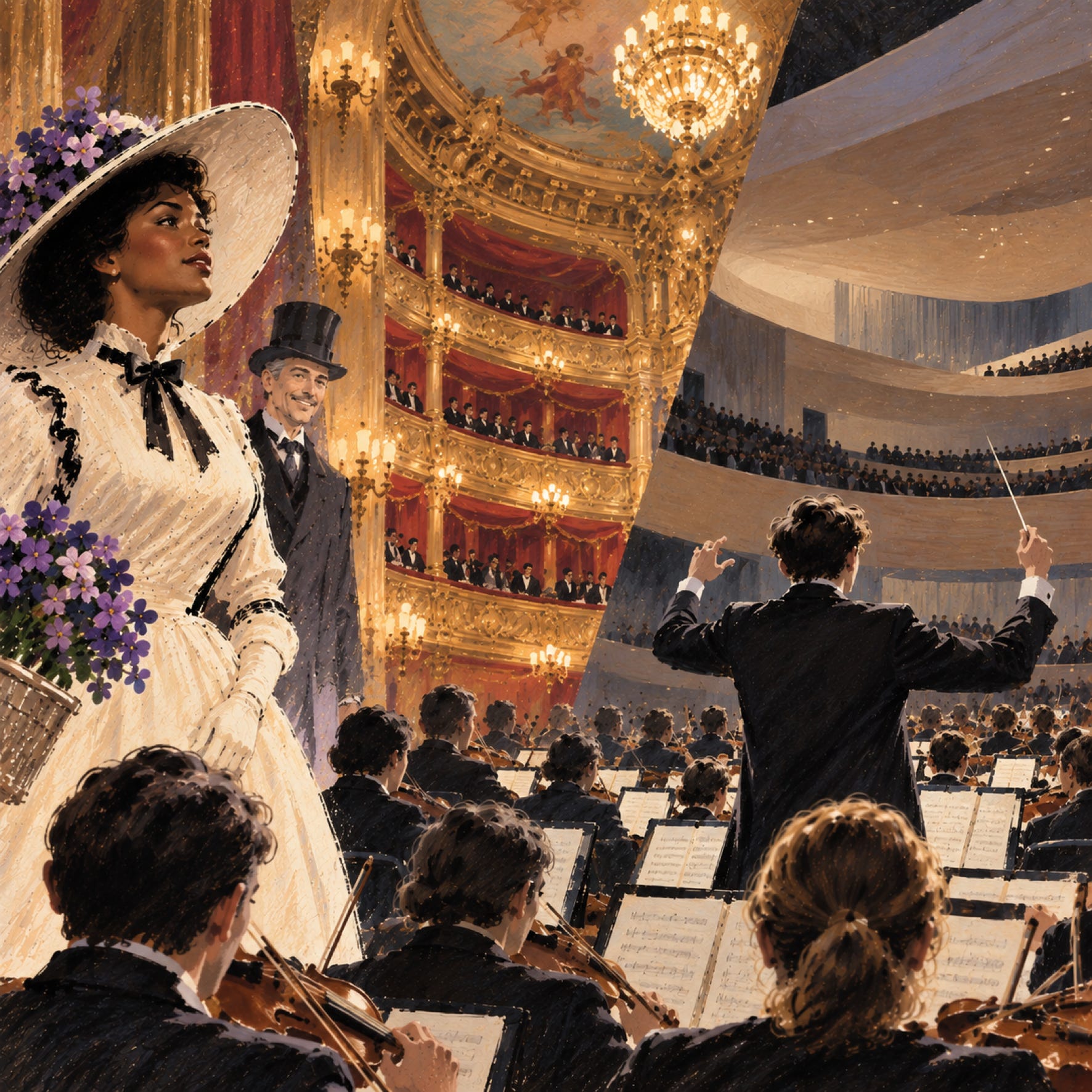
Chichester Festival Theatre • A new production of My Fair Lady brought me back to the time when every new Chichester production was an event to look forward to. Save for the lack of an overture and the baffling lighting plot, the show scored highly in every department, from Hadley Fraser’s slightly manic but touching Professor Higgins to a set versatile enough to endure the rapid succession of scene changes, especially in the second act. Director Rachel Kavanaugh’s vision teemed with thoughtful touches, like the violets appearing in a number of unexpected places or the finely tuned staging of “Congratulations, Professor Higgins”, showing a real capacity to heighten the drama without making the slightest change to the text. The interval was moved before the Embassy Ball, though, something I’ve never really got used to. Doolittle’s two musical numbers were performed with the kind of enthusiasm one cannot seriously resist, and I think I even detected a couple of extra bars here and there. Who cares, then, that Keziah Ibe tended to lose her Cockney accent while singing? She was a delightful Eliza, youthful, exuberant and dignified.
Sunday 6 September
Paris, Palais-Garnier • Members of the Opéra de Paris’s resident orchestra decided to create a self-governed symphonic ensemble, which they named Philopéra. They invited Daniel Harding to conduct their inaugural concert, held in one of their usual places of work, the Palais-Garnier, under the watchful gaze of both Alexander Neef and Semyon Bychkov, the institution’s General Director and Musical Director Designate. The programme, consisting of Schubert’s Symphony No. 3 and Mahler’s Symphony No. 1, was a bit of a disappointment; the newly formed orchestra could have opted instead to honour the French repertoire. The letdown didn’t stop there, as the performance felt stiff and never quite conveyed a sense of collective purpose. I couldn’t help drawing parallels with the underwhelming concerts of the MET Orchestra a few days earlier: two ensembles apparently ill at ease outside the orchestra pit and hesitant to take sole collective ownership of a musical interpretation.
Tuesday 8 September • Wednesday 9 September • Thursday 10 September
Paris, Philharmonie de Paris • Attending a public rehearsal and two performances of the same concert — Mahler’s Symphony No. 3 by the Orchestre de Parisunder Klaus Mäkelä — turned out to be an even more fascinating experience than I had anticipated. The interpretation had already pretty much gelled before the public rehearsal, so there was no last-minute “magic” adjustment producing the kind of metamorphosis I’d seen in other circumstances. There were, however, some appreciative and not-so-appreciative glances at leader Sarah Nemtanu, who received the feedback with her usual eagerness. Whether in rehearsal or in performance, the feeling that the entire orchestra shared a vision before the horns even started playing their triumphant opening fanfare created a combination of superlative individual engagement and perfectly synchronised collective energy. The enjoyment was as much visual as it was aural, with musicians attentive to one another, grinning with pleasure, immersed in the experience. The five pairs of cymbals crashing in perfect unison in the last movement — in striking contrast with the barely audible cymbals in the previous Sunday’s Mahler 1 — and the choreographed ballet between the two timpanists were only the tip of the iceberg: music was the ultimate victor of those three gripping evenings.