
A “young” country born in 1964, whose name combines the first three letters of its constituent lands, continental Tanganyika and insular Zanzibar, plus the ending -ia.
Stepping out of a modern Boeing 777 at a small, somewhat improbable, international airport and being confronted straight away with otherworldly scenery dotted with strangely shaped acacias.
Red, iron-rich earth everywhere, which turns into a stubbornly insinuating dust that finds its way onto absolutely everything — seats, luggage, clothes, face, hair.
A still developing country with uneven infrastructure but a perfectly organised tourism industry — from the cozy tented camps with all modern comforts in the wildest areas to the ubiquitous and seemingly unbreakable safari-equipped Toyota SUVs with their devoted, clever guides, always ready to help colleagues who have encountered difficulties.
Chinese and Indian investments aplenty; the complex ownership of the country’s mineral wealth — gold, tanzanite, diamonds — hinting at a subtler continuation of older economic relationships.
The ever-present Maasai, one of the region’s most recognisable peoples with their traditional red garments. Some of them still live a semi-nomadic pastoral lifestyle while others have elected to settle in more urban settings.
The universal and probably meaningless tourist greeting “jambo jambo!”, and the appreciative smiles when one answers instead with the more idiomatic Swahili “habari?” The almost-as-frequent “hakuna matata!” (no problems!), known to every visitor thanks to The Lion King.
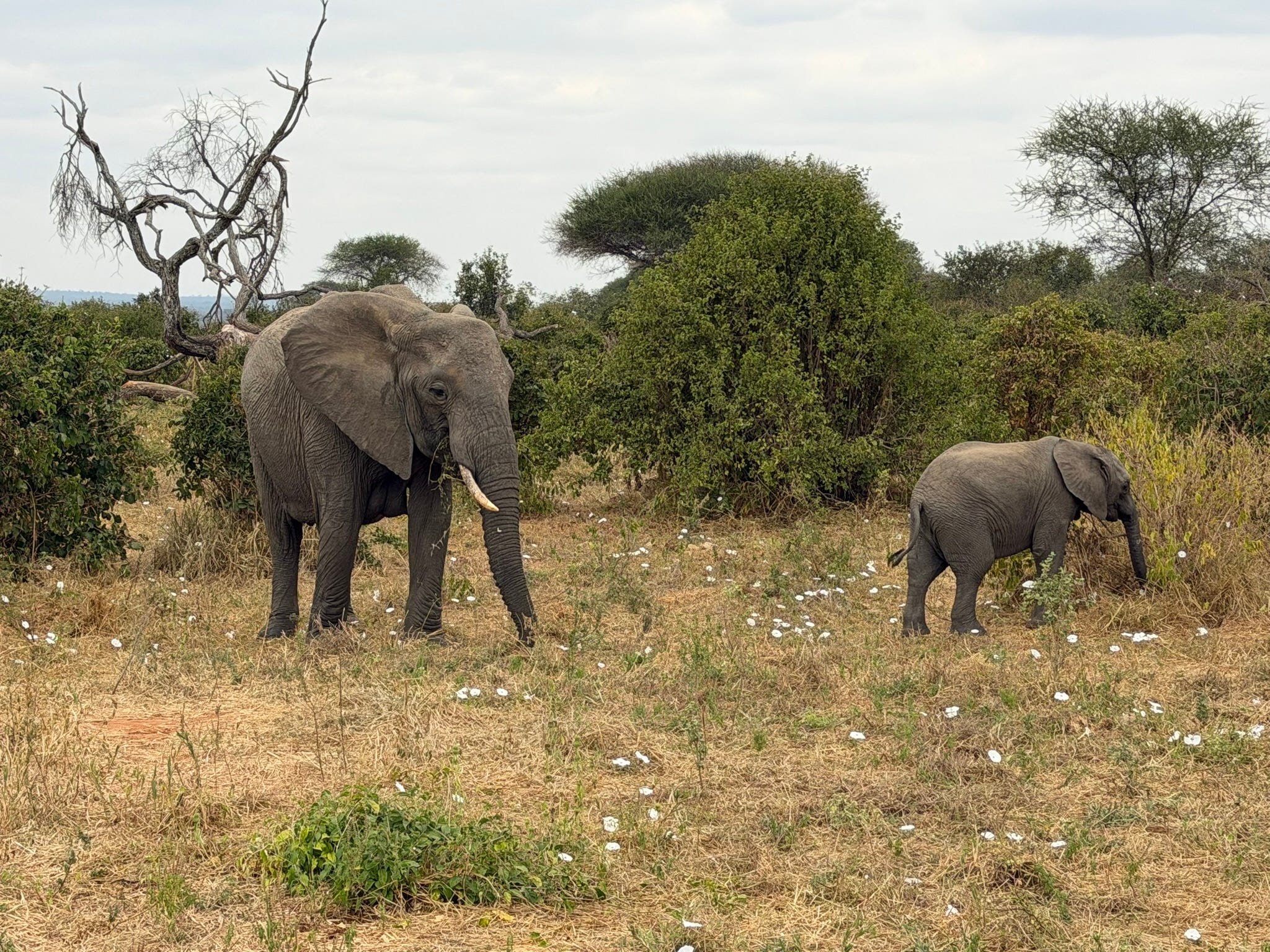
Wildlife everywhere, in the Tarangire National Park and its giant baobab trees, the Ngorongoro Crater and its pink flamingos, and of course the seemingly boundless Serengeti, where I was lucky to witness the annual northward migration of the wildebeest, involving a risky crossing of the River Mara.
Watching huge herds of wildebeest act as interconnected entities in their determined movement, hesitating for hours before choosing a crossing point until one animal decides it’s time and jumps into the water where crocodiles lurk, leading the entire herd to follow in one irresistible movement.
Seeing the sun rise over the Mara from a balloon slowly gliding over endless territories where thousands, perhaps millions, of animals go on with their lives unbothered — well worth the 4am call.
Among the week’s encounters: termites everywhere, lions hiding from the sun (including a majestic male), leopards lounging in trees, a cheetah and a jackal concealed in tall grass, hyenas (particularly striking when caught in headlights before sunrise), debonair elephants, bulky buffaloes, giraffes, idle zebras, curious baboons, cheeky monkeys, graceful Thomson’s gazelles and impalas, earthbound ostriches, smelly hippopotami, adorable warthogs, scheming mongooses, a rabbit, circling vultures and opportunistic marabou storks… and the incomparable secretary bird. I’m probably forgetting a few. Among the so-called “big five,” only the rhinoceros remained elusive.
Echoes of Karen Blixen and Beryl Markham, whose experiences I can now relate to, albeit in admittedly different conditions of comfort and sanitation.
Discussing The Band’s Visit with an Israeli family from Petah Tikva while enjoying a surprisingly tasty Full English breakfast in the wild. Reminding myself that The Secretary Bird is the title of a pretty successful 1968 English play which failed to reach Broadway but enjoyed a dozen productions in Paris as Le Canard à l’orange.
Finding it strangely difficult to say goodbye to Lukumay, my youthful, personable and knowledgeable Maasai guide, who constantly went above and beyond to make my visit unforgettable, even when a dysfunctional checkpoint meant we had to dramatically cut short our visit to Ngorongoro.
And so, for now, the lights dim… until the next act.