
Saturday 31 October
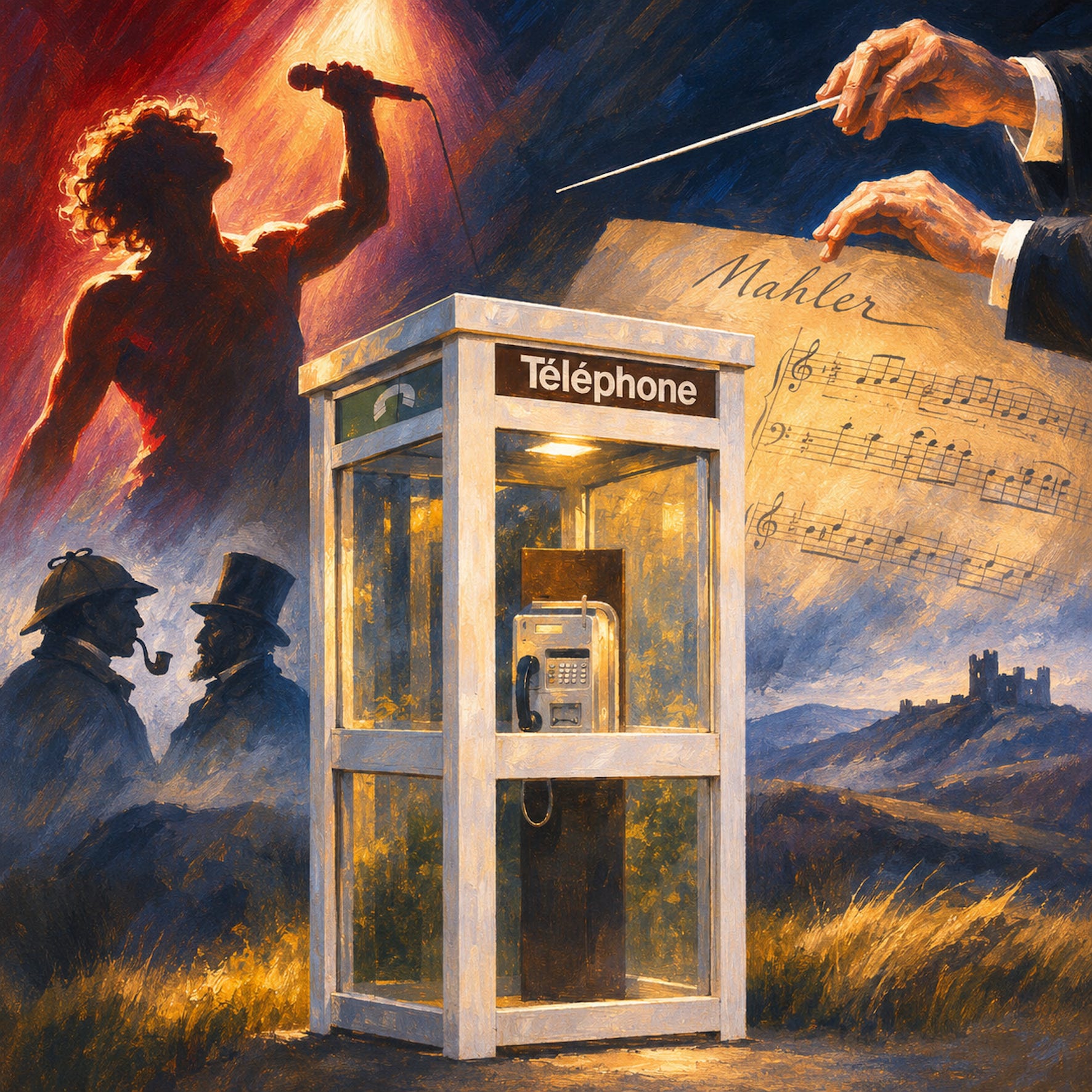
London, Theatre Royal Drury Lane • I had to find a Plan B when my performance of Kimberly Akimbo got cancelled at the last moment. This loud production of Jesus Christ Superstar felt like a mashup of everything I have come to dislike about modern stagings: too serious (I blame Sam Mendes’s Cabaret), too eager to show off the cast’s musculature and tattoos (I blame Hamilton), more akin to a rock concert than a stage show, with principals wielding handheld microphones (I blame Spring Awakening). Granted, JCS was designed as a rock musical, but that doesn’t justify turning it into a series of The Voice-style screamfests. My mind wandered: at one point, I wondered if the decision to render the Royal Box unusable because of the set design had to be run past the Palace. But, then again, I doubt the King would want to attend.
London, Old Vic • The transformation of a proscenium theatre into an in-the-round space rarely convinces, although a sufficiently strong play can overcome the limitations, as the Old Vic demonstrated almost twenty years ago with Matthew Warchus’s production of Alan Ayckbourn’s The Norman Conquests trilogy. In the case of his Martin Guerre, the setting only brought the audience closer to a mediocre show. The musical which interrupted Boublil & Schönberg’s remarkable winning streak after Les Misérables and Miss Saigon had already gone through several revisions during its original London run in 1996, and this cheap-looking new production did nothing to restore the reputation of an ill-written, mostly uninspired show. At least the original boasted Jérôme Pradon to carry the day.
Sunday 1 November
Amsterdam, Concertgebouw • Klaus Mäkelä broke with his recent habit of conducting without a score to lead the Royal Concertgebouw Orchestra in Mahler’s underappreciated Symphony No. 7, a favourite of mine. There were signs of the youthful outbursts that Mäkelä’s detractors like to hold against him, especially in the opening and closing movements, which might have been a little too fast and a little too bright. Nevertheless, the orchestra’s lush sound worked wonders in the middle movements, one of which, fittingly, is supposed to have been inspired by Rembrandt’s Night Watch, which hangs in the Rijksmuseum, only a short walk from the Concertgebouw.
Monday 2 November
Paris, Philharmonie de Paris • Daniele Gatti led the Staatskapelle Dresden in Deryck Cooke’s “performing version” of Mahler’s Symphony No. 10. The piece took strange turns at times, with expressionistic undertones taking it outside of familiar Mahler territory. Gatti displayed an uncanny ability to control every detail of the orchestra with economical gestures, alternating between lush lyricism and grating anguish. We’ll never know how closely Cooke managed to reflect Mahler’s intentions beyond the completed introductory Adagio; the resulting symphony, however, proved powerfully gripping in its own right.
Tuesday 3 November
Paris, Théâtre Saint-Georges • Jean-Christophe Dollé’s Téléphone-moi provided a case in point of a clever, intriguing concept only partially realised. Three generations enter into an unexpected, sometimes psychoanalytical, conversation across time using three designs of telephone booths — at least two of which looked very familiar to audience members of my generation. Dollé abandoned his device about two-thirds of the way through the play, apparently unaware that the constrained form did a lot to hold the drama together. Alas, knowing how to end a play trumps finding the inspiration to start writing one. The performance also brought me back to the time when no French production was complete without malfunctioning microphones.
Wednesday 4 November
Paris, Studio Marigny • Julien and Florence Lefebvre’s Les Aventuriers de minuit imagined a chance encounter between Arthur Conan Doyle and Jules Verne in London, leading to a breathless chase eventually taking them to the Scottish moorlands. I couldn’t help but admire the show’s ambition in such a small space. The modest scenic apparatus was complemented by sophisticated projections establishing an appropriately epic mood. All in all, an unusual yet unexpectedly rewarding theatrical experience.
Friday 6 November
Paris, Philharmonie de Paris • As my concert companion rightly pointed out, the Chamber Orchestra of Europe has the word chamber in its name, and sure enough the 51-strong configuration made Dvořák’s Symphony No. 7 feel like an undernourished, sickly child, lacking both foundation in the bass and power in the upper registers. What the orchestra lacked in sonic weight, Antonio Pappano tried to make up for with constant shifts of energy and exaggerated contrasts, but all that posturing left me unmoved. Glorious as Alexandre Kantorow’s piano sounded in Brahms’s Piano Concerto No. 1, an orchestra of this size never offered the soloist a satisfactory balance.